Sitting pose reference
Sitting pose reference you can turn in 3D
Chairs, floors, benches and steps: sitting poses are where proportions most often go wrong. Pick a pose, turn it to your angle and see exactly how the thighs foreshorten and where the weight sits.
 Front
Front 3/4 front
 Side
Side Back
BackSitting poses
24 poses. Click a pose to see it from every angle, then open it in the 3D Studio to adjust and export it.
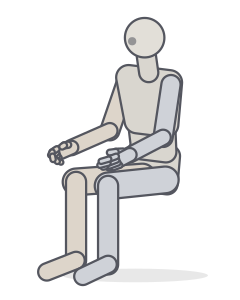 Seated (chair height)Sitting
 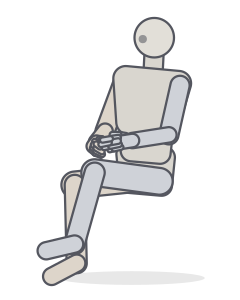 Seated, legs crossedSitting · Relaxed
 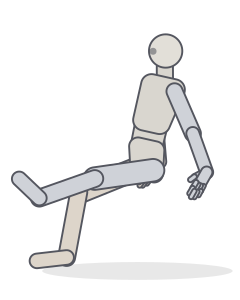 Sitting on the floorSitting · Relaxed
 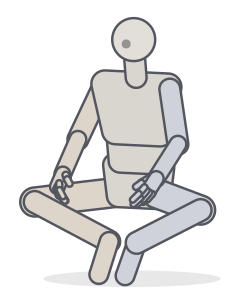 Cross-leggedSitting · Yoga
 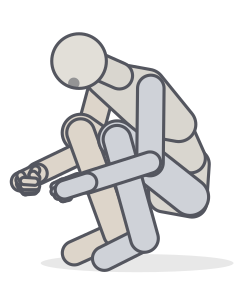 Hugging kneesSitting
 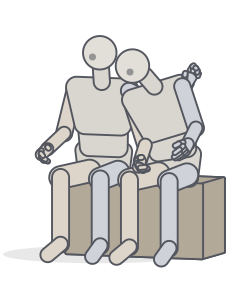 Leaning on a shoulderTwo people · Sitting
 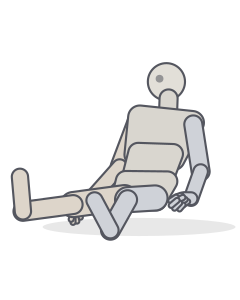 SittingMotion capture
 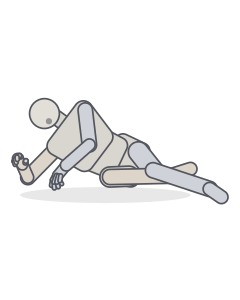 Laying down and getting upMotion capture
 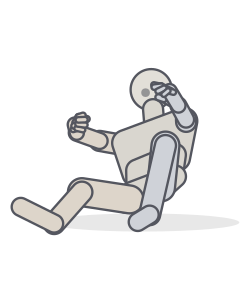 Get Up Laying on SideMotion capture
 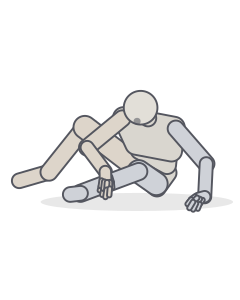 Get Up From Ground Laying on BackMotion capture
 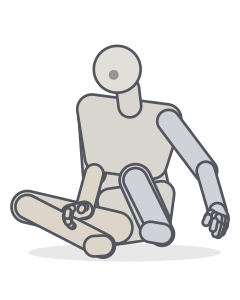 Lay down and get upMotion capture
 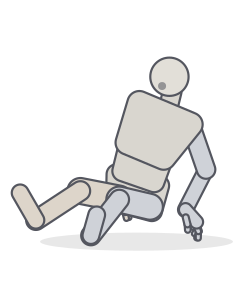 Sit down and stretchMotion capture
 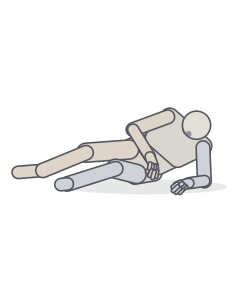 Get Up From Ground Laying on BackMotion capture
 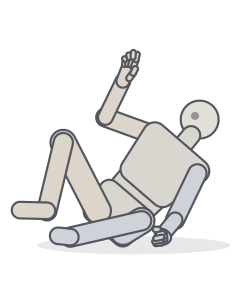 Run Dive Over Roll RunMotion capture
 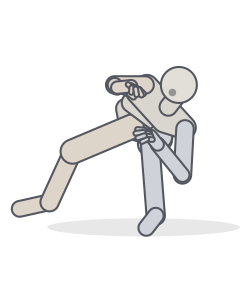 A picks up high stoolMotion capture
 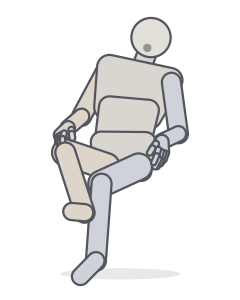 Sitting in chairMotion capture
 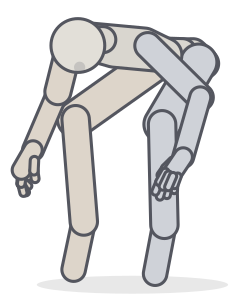 Low sitMotion capture
 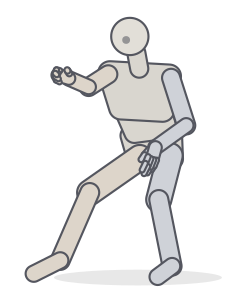 B sitsMotion capture
 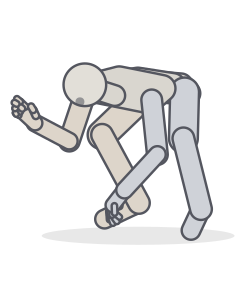 Friends meetMotion capture
 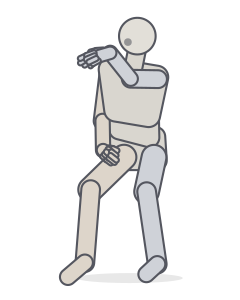 A sitsMotion capture
 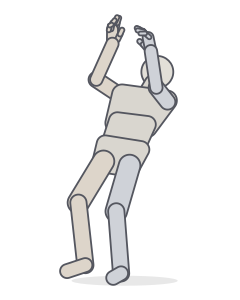 ClimbMotion capture
 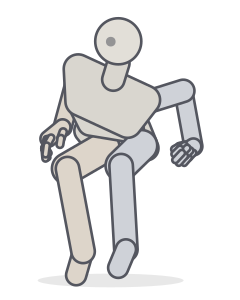 Sit in chair and get upMotion capture
 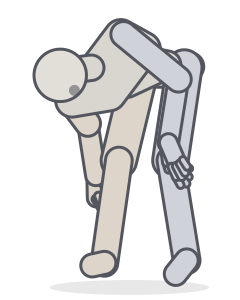 WalkingMotion capture
 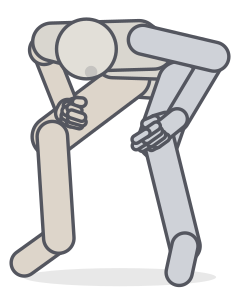 Sit on stepstoolMotion capture
Includes poses derived from the CMU Graphics Lab Motion Capture Database (mocap.cs.cmu.edu), created with funding from NSF EIA-0196217.
How to draw a sitting pose
- Find the sit bones. The weight rests on the two bony points at the base of the pelvis. Place the pelvis first, then decide whether it tilts back (slouching) or forward (upright, alert).
- Hang the spine from the pelvis. An upright sitter stacks ribcage over pelvis; a relaxed one lets the ribcage sink behind it and the shoulders round forward.
- Foreshorten the thighs. From the front or three-quarter view the thighs come toward you. Overlap the knee over the thigh and keep the visible length short.
- Ground the feet. Feet on the floor carry a little weight even when sitting; tucked or crossed legs change the silhouette completely, so check the side view.
Chair height, floor and bench poses
A chair puts the hips roughly at knee height, so thigh and shin form a right angle. On the floor the knees rise above the hips (as in the hugging knees pose) or the legs extend forward. For a cross-legged pose, the thighs rotate outward at the hip, which you can explore joint by joint in the Studio’s Selected joint panel.
Real sitting poses from motion capture
The gallery also includes frames from motion-capture recordings: people sitting down, perching and getting up. They capture the small asymmetries that hand-made poses often miss: one shoulder lower, the weight shifted onto one hip.
Frequently asked questions
Why do sitting figures look wrong when I draw them?
Usually the thighs. Seen from the front, a seated thigh points toward you and appears much shorter than it is. Draw it as an overlapping cylinder rather than at full length, and check it against a 3D reference from the same angle.
How do I draw a chair under the figure?
Pose the figure first, then build the chair to fit the hips. In the Studio, add a chair from Props and press “Fit under the hips”: it matches the seat height to the pose.
Can I see a sitting pose from above or below?
Yes. Open any pose in the Studio and use the High Angle or Low Angle camera presets, or orbit freely. High angles are useful for desk and floor scenes.
Keep practising
Make the exact pose you need
Start from any of these poses, then adjust joints, hands, body type and camera in the Studio. Export a PNG, a GIF or AI guide images.